
Let’s Start With Some FACTS

Family with food on the table have many problems.
Family with no food on the table have one problem.
–Chinese Proverb
December 15, 2025 update from December 8, 2020—Exactly five years ago this writer explained Alaska’s Food Security dilemma in a series of stories before and after what some suspected was a corrupt statewide election. Despite all the political noise and subsequent PFD cuts—with record AK budgets passed since this original story—nothing has changed for actual food security. AK voters buy most food from Outside Alaska and continue electing mostly hack politicians to manage the Alaska Plantation.
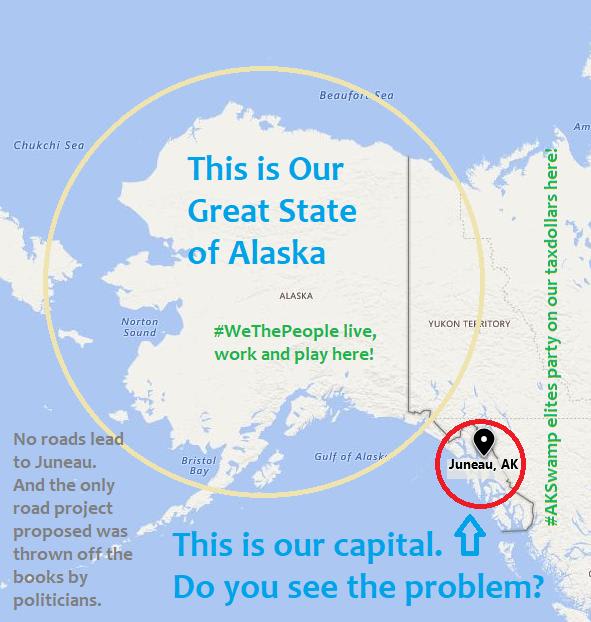
Basic Reality About Alaska Food Security:
Smart decisions about policy are DATA-Driven.
Cost for MOST food Alaskans consume is determined by costs to produce and deliver it primarily from Seattle.
Alaska officials elected from districts around the state are fed very well by Seattle in Backwaters Juneau.
Everything else is HAPPYTALK.
Alaska’s Population is Stagnant for Many Reasons

A Lot of Alaskans Don’t Vote and MANY Stupid Ones Do
What are the possibilities of Electronic Voting Manipulation? If you have ever lost any money from someone who convinced you to contribute to something online with expectation of a return, you know the helpless feeling when that person disappears into the ether. Once the money transfers the former “friend” is gone and you hate to admit you did something so stupid.
[1] What if Alaska’s 2020 Election was Hacked? DONN LISTON, April 6, 2021
Live Links in References
Alaska Elections Work the Same Way—Impacting Food Security

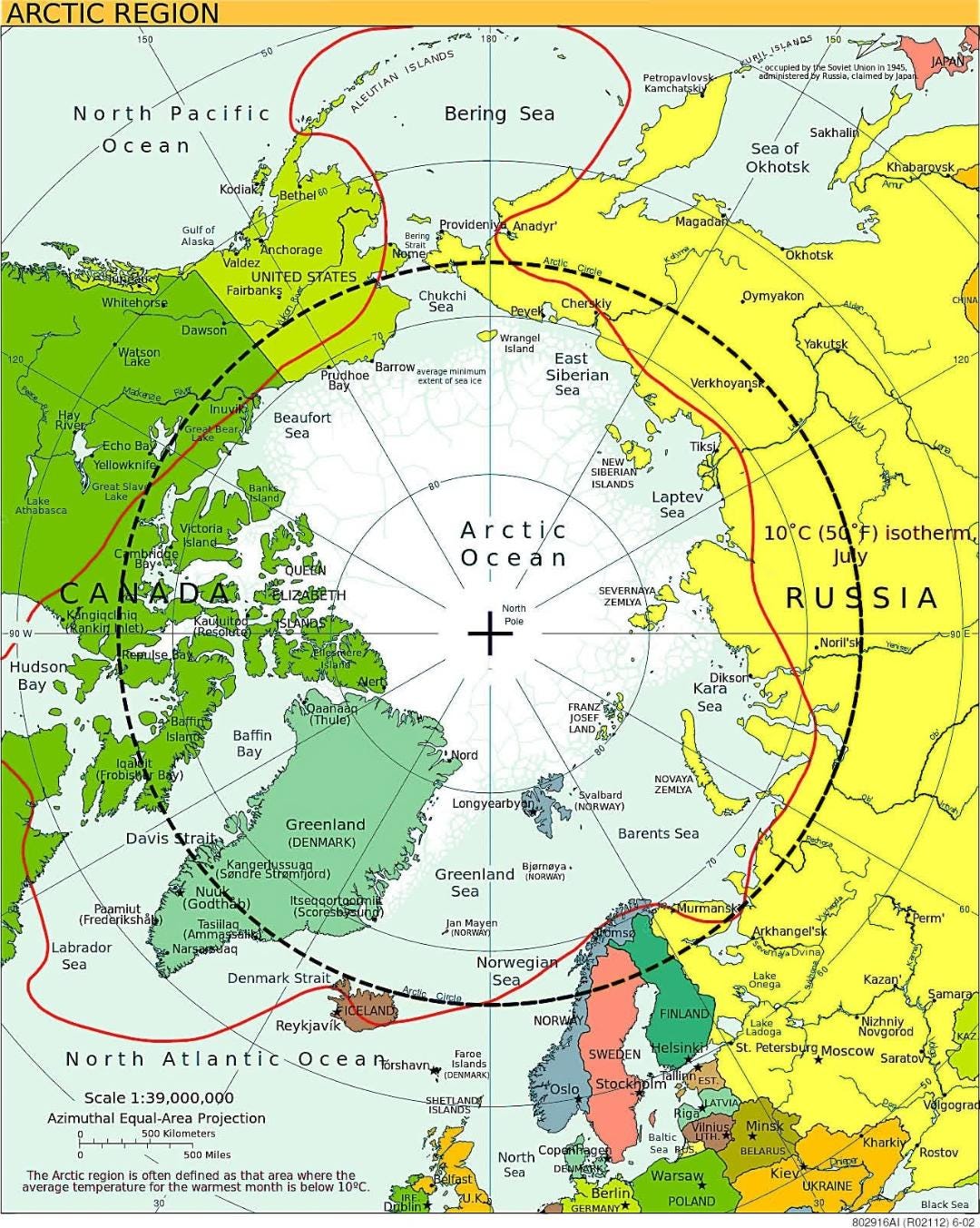
Let’s look at the big picture of Alaska Food Sustainability
The idea of having enough food available for everybody in Alaska doesn’t seem to be an outlandish expectation, given our low population over a large landmass surrounded by abundant ocean. Many northern climates are well-populated and sustainable.

Food Security is a Popular Hobby-Horse for AK Politicians!
The concept seems reasonable, but we who live here must ask:
At what population level will Alaskan food dependency make us vulnerable to food shortages due to events and circumstances out of our control?
The China Pandemic was a Warning

What happened in the 2020 China Pandemic: Suddenly store shelves were empty and we were told by elected officials to Hunker Down. Do you think something like that cannot happen in Alaska again?
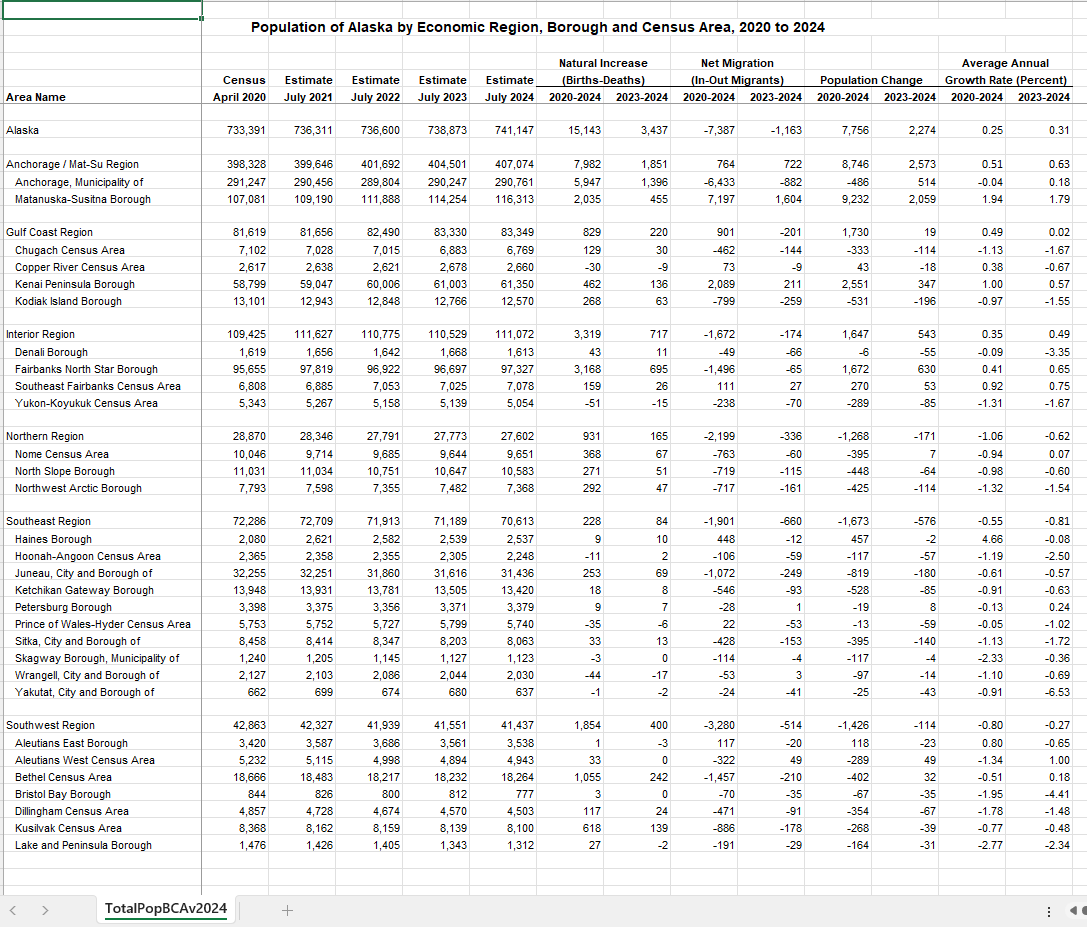
What We Know
Some of us are more prepared for disaster than others as a matter of fact. Indigenous people experienced life on much more tenuous terms and food security required a major portion of their waking hours. They live closer to the land with their subsistence lifestyle and food security is an understood part of their culture in rural Alaska.
But for many Alaskans, food comes from the grocery store and chocolate milk comes from brown cows. The ability to catch wild fish and hunt game animals large enough to fill a freezer may provide a false sense of food security for the mainstream of Alaskans living in Southcentral. During the China Pandemic beginning officially in March of 2020, Alaskans also learned toilet paper doesn’t grow on trees.

[2} AK National Guard Initiates Response
Live Links in References
Challenges of Feeding All Alaskans
The size of Alaska–one-fifth the size of the continental USA, with a stagnant population well below one-million people residing mostly along the Rail Belt corridor–creates a challenge. The fact Alaska is mostly located in the Arctic Climate Zone between Russia and Canada provides another challenge. But human nature provides the greatest challenge; we eat what we like to eat.

Seattle is the Choke Point for Alaska Food Imports
From Seattle most food shipments land on the docks at Anchorage. Likewise, the fleet of ocean fishers are mostly ported on the west coast–Washington, Oregon, California. Most fish bought in Alaska was likely processed Outside and returned to us at some expense. We are captive to the west coast states who profit greatly from Alaskan natural resource abundance.

Catastrophic loss of the Anchorage Dock, or destruction of one or both of the two primary highways out of Anchorage, could have immediate consequences for food security. From a practical perspective we also know Food Stamps (SNAP) won’t buy as much for people on the government dole who may not have food stocks.
Somebody Studied this!
In 2014 the Alaska Department of Health and Social Services contracted with Crossroads Resource Center in Minneapolis, Minnesota, to research and report to
the State of Alaska on Food Security. The report was produced that July by Ken Meter and Megan Phillips-Goldenberg—after no doubt a wonderful adventure holding spring town hall meetings around the state.
[3] Building Food Security in Alaska, Ken Meter & Megan Phillips-Goldenberg, Crossroads Resource Center, Minneapolis, MN, July 28, 2014.
Live Links and jpg files in References
Since Alaskans AQUIRE most food for personal consumption from Outside, why shouldn’t we get our ADVICE about food security from Outside, too? That is how it works for the State of Alaska based in Backwaters Juneau, you know.

Manila is the largest city in Philippines, and after the PH Senate gave the non-profit arts organization the bottom floor of the Assembly Building here, it wasn’t long before they wanted the whole thing.
The politicians then GAVE the historic building to Arts Organizations and moved elsewhere to try to get something done for Filipinos who elected them.
[4] Former Philippine Capitol Makes Dandy Museum- …and Revelations about Juneau’s Capital Theme Park, DONN LISTON, June 8, 2023
Live Links in References

Juneau HAS Food Security
It is simple reality that the colony of Alaska has a natural dependency on the United States for damn near everything. Having adequate food to support the flood of Outside teachers and public employees to service this great area is part of the deal. The fact everything costs more gives those economic Argonauts bragging rights for hazard pay in AK jobs they might not qualify for elsewhere.
In their report, the Minnesota researchers explain how our primitive Alaska Food Security system is different than civilized places--documented by their UA counterparts.
Readers May Need to Turn on Their Bullshit Detectors
From the Report:
Often the definition of “food security” in the Lower 48 is more focused on ensuring that low-income residents have a secure food supply. Increasingly this term has come to mean that low-income communities produce food for themselves.
In this report “food security” is used in the Alaska sense, captured best by University of Alaska researchers below.
In the context that we use it here, food security describes more than merely whether sufficient food is being produced, or a one-size-fits-all food-nutrition relationship, and incorporates all of the various ways in which a food system supports health in its various biophysical, social, and ecological dimensions (Loring & Gerlach, 2009). These include matters such as the importance of certain foods, food choice, local perceptions of hunger, uncertainty and worry about food safety or shortages, and any other psychosocial, sociocultural, or environmental stresses that result from the process of putting food on the table (S. Maxwell, 2001).
But That’s Not All
In rural, predominately Alaska Native communities, for example, wild fish and game are important for food security, not just because they are readily available, but also because they are important to the preservation and transmission of traditions and cultural practices, for the maintenance of social networks and interpersonal relationships, and for supporting individuals’ sense of self-worth and identity (Fienup-Riordan, 2000; Loring & Gerlach, 2009; Loring, Gerlach, & Harrison, 2013)
So there you have it Alaskan Rubes: these challenges for food security are dependent on whether rural Alaskans’ traditional food security is fulfilled. Nutrition is Secondary.

Alaska Researchers Who Live Here Might Arrive at Different Conclusions
While patronizing the minority population of Alaskans these WOKE researchers some six plus years ago could not deny there is a bigger picture presented to them by the data,

The most critical concern Alaskans hold for the future of food is the security of its food supply. 95% of the $2 billion of food Alaskans purchase is imported — meaning $1.9 billion leaves the state each year as Alaskans eat. Moreover, this food is shipped through long supply chains. Essential items arrive by airplane, barge, (container ship) and truck from Mexico, Europe, Asia, and the Lower 48.
Technical Note: ISER calculates this total to be $2.5 billion. The more conservative figure was used. Travelers in Alaska, of course, also purchase substantial amounts of food that are not included in these totals.

In his book, Dr. Haycox explains the nature of Alaska’s historic colony relationship to the United States.
What links these two periods of Alaska history, Russian America and American Alaska is colonialism. (T)he Russian colony was always dependent on external sustenance, from Russia itself, and more economically from American and British trade. Russian America never attained self-sufficiency. American Alaska has been similarly dependent because the capital necessary to develop natural resources has never resided in the territory. Pg xiv-xv
What Alaskans Can Do to Improve Personal Food Security
Many of us have started gardens. My results have been pitiful but I will keep trying. Others are obviously doing much better from what I have seen at numerous Farmer’s Markets.
The University of Alaska Fairbanks Cooperative Extension Service has long been the traditional source of information about Alaska agriculture. Between November 17 and December 22, 2020 they provided a free distance-delivered series on food security over a Zoom Link now expired.

Topics of the webinars included (2020):
Starting and maintaining a home food pantry, Nov. 17
Exploring home freeze drying, Nov. 24
Chicken University, the basics on raising chickens, Dec. 1
Gardening and food security, Dec. 8
Smart grocery shopping, Dec. 15
Home food preservation overview, Dec. 22
Additionally, UA provides a grower training program for aspiring producers. This program is in cooperation with the Alaska Department of Environmental Conservation. As a poor gardener myself, over the years I have depended upon Fairbanks UA Cooperative Extension Office publications for this hobby, but a number of developing infrastructures like Farmers Markets and Food Banks indicate blossoming interest in food creation here.

Why Don’t Alaskans Just Do what they Do Outside?
Six years ago the US Department of Agriculture, Farm Service Agency’s FSA News included this notice of interest to Alaskans:
First Meeting of the Alaska Food Policy Council, May18, 2018, Anchorage
A diverse group of Alaskan interested in forming the Alaska Food Policy Council will convene in Anchorage on May 18. These stakeholders are all experts in their field and critical to building a viable food system in Alaska. The Council will work together over the next two years to develop comprehensive food solutions and strengthen our economy, our food security and our health. Mark Winne of the Community Food Security Coalition will be there to talk about his successful experience in other states and help Alaska kick off this collaborative effort. Please contact Diane Peck at 907.269.8477 or dianne.peck@alaska.gov for more info.”
{emphasis added}
Again, according to the UA Cooperative Extension Service that food policy council had ambitious plans for our food security well-being in line with other state, national and even international efforts:
Working Toward a Healthy, Secure Food System that Feeds all Alaskans.

As Reported in their 2020 website:
The Alaska Food Policy Council works to strengthen Alaska’s food systems to spur local economic development, increase food security, and improve nutrition and health. The Council serves as a resource for information on local and state food systems, and works to identify and propose policy and environmental changes that can improve the production, processing, distribution, health, security and safety of our food.The AFPC recently completed a three-year strategic plan,10 in which it outlined five major goals and strategies in specific focus areas: access; economic development; safety, security and protection; sustainability; and public engagement.
Goals:
• All Alaskans have access to affordable, healthy (preferably local) foods.
• Alaska’s food-related industries have a strong workforce and operate in a supportive business environment.
• Food is safe, protected and supplies are secure throughout Alaska.
• Alaska’s food system is more sustainable.
• Alaskans are engaged in our food system
Strategies:
1. Develop, strengthen and expand the school-based programs
and policies that educate about and provide healthy, local foods to schools
(e.g., Farm to School Program, Agriculture in the Classroom, traditional foods
in schools, school gardens).2. Strengthen enforcement language in the Local Agricultural
and Fisheries Products Preference Statute (AS 36.15.050), also known as the
“Seven Percent” statute and Procurement Preference for State Agricultural and
Fisheries Products (Sec. 29.71.040).3. Advocate and participate in the development of community level and comprehensive statewide emergency food preparedness plan(s).
4. Develop AFPC’s role as research aggregator and resource.
5. Identify and support existing local food system leaders, projects, events, and activities that support Alaska’s food system. While the Council has a clear direction in which to aim its efforts, the order is a tall one. Across the country and the world, food policy councils have formed at local, state, regional, natioal, and even international level (the Food and Agriculture Organization of the United Nations, for example, is the inheritor of the World Food Council, originally formed in December 1974). There are at least seventeen state-level food policy councils in the United States, and many more addressing food policy at the local, usually municipal, level.
And here is the clincher:
Alaska faces many unique challenges when compared to these organizations, not least of which is the perception that Alaska is an “ice box” in which nothing can grow—or even should be grown. As the state’s many gardeners and farmers know, however, this perception is errant nonsense—yet it persists, perhaps as a subconscious prejudice, influencing policymakers in ways they may not even be aware of. Still, as Mother Earth News points out: The uniting feature among the various forms of food policy councils is the connection they establish between food producers and consumers, working to create relationships for a strong, local food web.
“Food Policy Councils Advocate for Community
Food Security,” by Jennifer Kongs, Editor 9/15/2010www.motherearthnews.com
This might have been enough to bring tears to any green-clad Alaskan’s eyes but what did it do for actually bringing food security to Alaska?
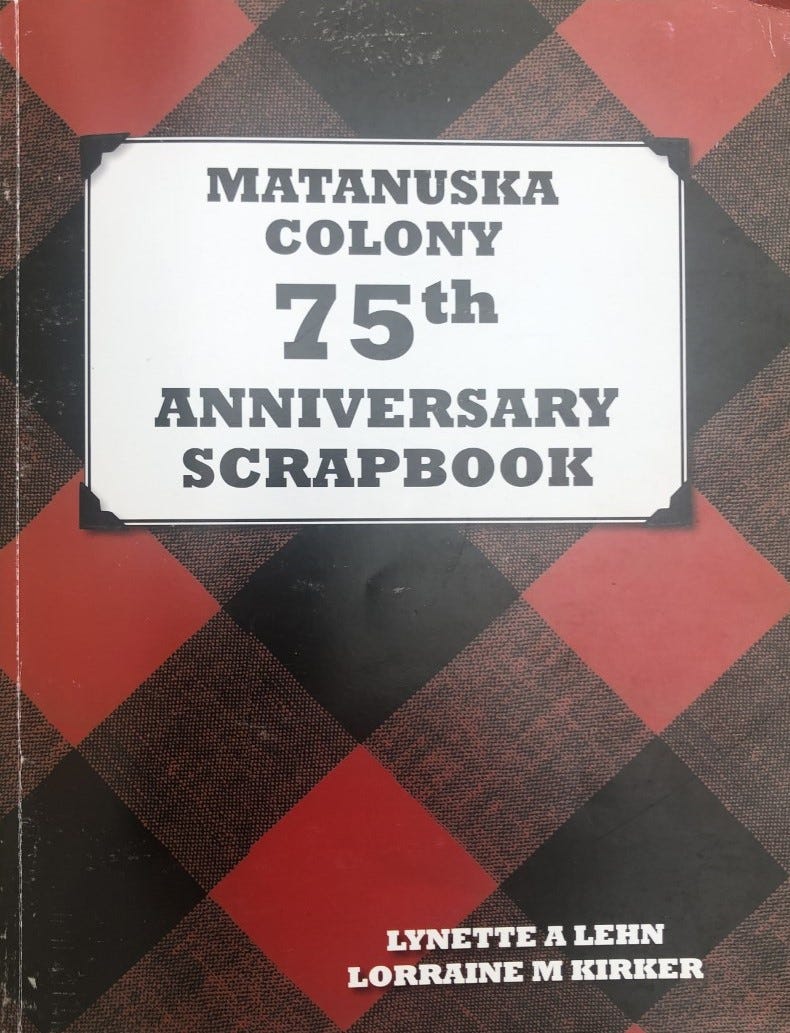
The LIE that Alaska is perceived as an Icebox unable to maintain cultivated crops is revealed by the Matanuska Colony Project launched by former President Franklin Roosevelt. Some 200 hapless farm families from northern US states were transported to Alaska and given 40 acres each to try and develop an agriculture base.
Sen, Hughes Represents this Region in the AK Legislature
Looking Back
On March 18, 2013 the Ghost of AFPC past had issued a press release informing media that the Alaska Senate had approved House Concurrent Resolution 1 (HCR 1), Sponsored by Chugiak/Eagle River Rep, Bill Stoltz with no opposition, asking Gov. Sean Parnell to create a food resource development workgroup whose mission is to advise the legislature on food policy issues and to bring together various food stakeholders for the purpose of promoting local food markets and increasing Alaska’s food security.
This is Called Chumming for Political Activists
Gov. Parnell did this, there were some meetings among appointed commissioners, and the workgroup dissolved one year later.



Revitalized AFPC Accomplishments over 5 Years
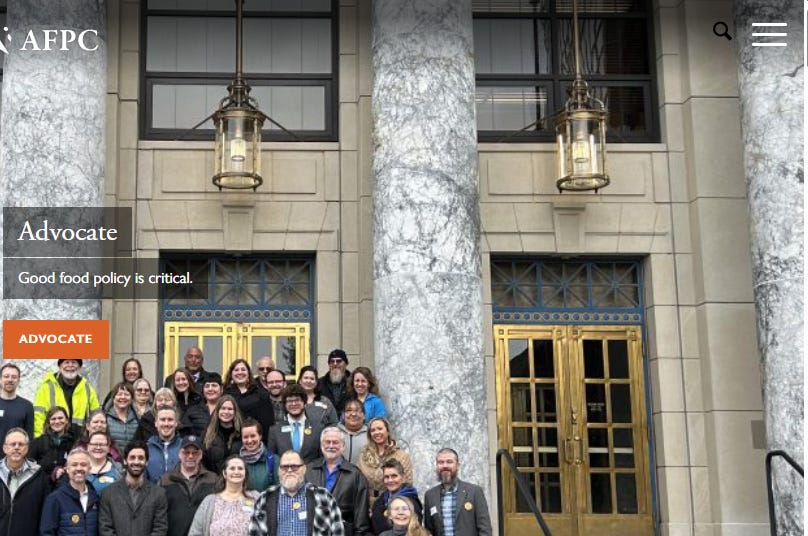
Government-Based Solutions
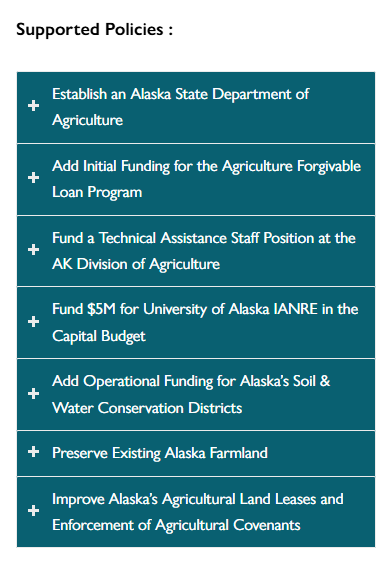
A remarkable accomplishments! Since this story first posted this government advocacy group has grown and it’s demands have become greater without any effort to raise the number of in-state farm animals or required infrastructure to replace what comes from the USA Pacific Northwest—currently feeding 90 percent of Alaskans at prices determined there,
Could this be a Covert Seattle Operation?

The promise of statehood was that we would determine our own destiny as part of the United States of America but today Alaska remains dependent upon Seattle for most of our food–shipped to Southeast Alaska ports and to the Port of Anchorage. Quality and price are controlled from out of state.
[5] Alaska’s Soviet-Style Food Security Program, DONN LISTON June 13, 2023
Live Links in References
The Dismal Record of the State of Alaska
Endeavors by the State of Alaska to build agriculture infrastructure using oil resource revenues and revolving loan funds have mostly been dramatic failures. A December 1, 2003 report by the Alaska Division of Agriculture provides some Historical Perspective.
The Mt McKinley Meat and Sausage Company (MMMS) was originally constructed as part of an ambitious plan to radically expand agriculture through state supported infrastructure development in the late 70’s and early 80’s. It was financed with $2 million of Agricultural Revolving Loan Fund (ARLF) monies in 1983 and then further financed with private funds of $1.2 million, to support cashflow.
A combination of factors, including an economic downturn predicated by reduced oil prices, a precipitous drop in grain prices, and a change of administration brought about the abandonment of the concept of agricultural infrastructure expansion. Many projects were abandoned, such as the grain elevator in Seward and the slaughterhouse facility in Fairbanks. Dairy farms went into foreclosure, as did the MMMS. The ARLF, in second position to the private lender, purchased the (slaughterhouse) asset in a foreclosure sale in 1985.
[6] Mt. McKinley Meats & Sausage Recommendations and Final Report, AK Div of Ag, Report Recommending State sale of the only USDA Meat Processing Plant in Southcentral Alaska, Prepared by: Marian Romano & Melanie Trost, December 1, 2003 53 pages.
Live Links in References
In other words, the State of Alaska appropriately quit throwing good money after bad after decades of failure.
The State Bureaucracy had taken over this valuable MMMS asset and ran it into
the ground, using prisoners to subsidize operation losses, slaughtering minimum numbers of animals, under the oversight of a team of managers each making six-figures. This is a familiar scenario for Alaska to anyone who has observed any of our top-down-from-Juneau state departments or our public education factories. When the commissioner of the Department of Corrections requested reimbursement from the Division of Agriculture for losses to Alaska Correctional Industries, and for staff due to operating shortfalls, the director decided to look at alternative operating options.
A group of Mat-Su farmer/businessmen decided they could run the facility better if the state sponsored them to run it by committee as Denali Meat Company. Their statement for how to transition the state resource to them is laughable.
[7] Denali Meat Company Statement of Interest, proposal for a central committee to be subsidized by the State to run the slaughterhouse (rejected), Nate Burris, Mat Valley Meats et al
Live Links in References
Further:
Letter from Burris to Legislator Advising how to Deal with MMMS
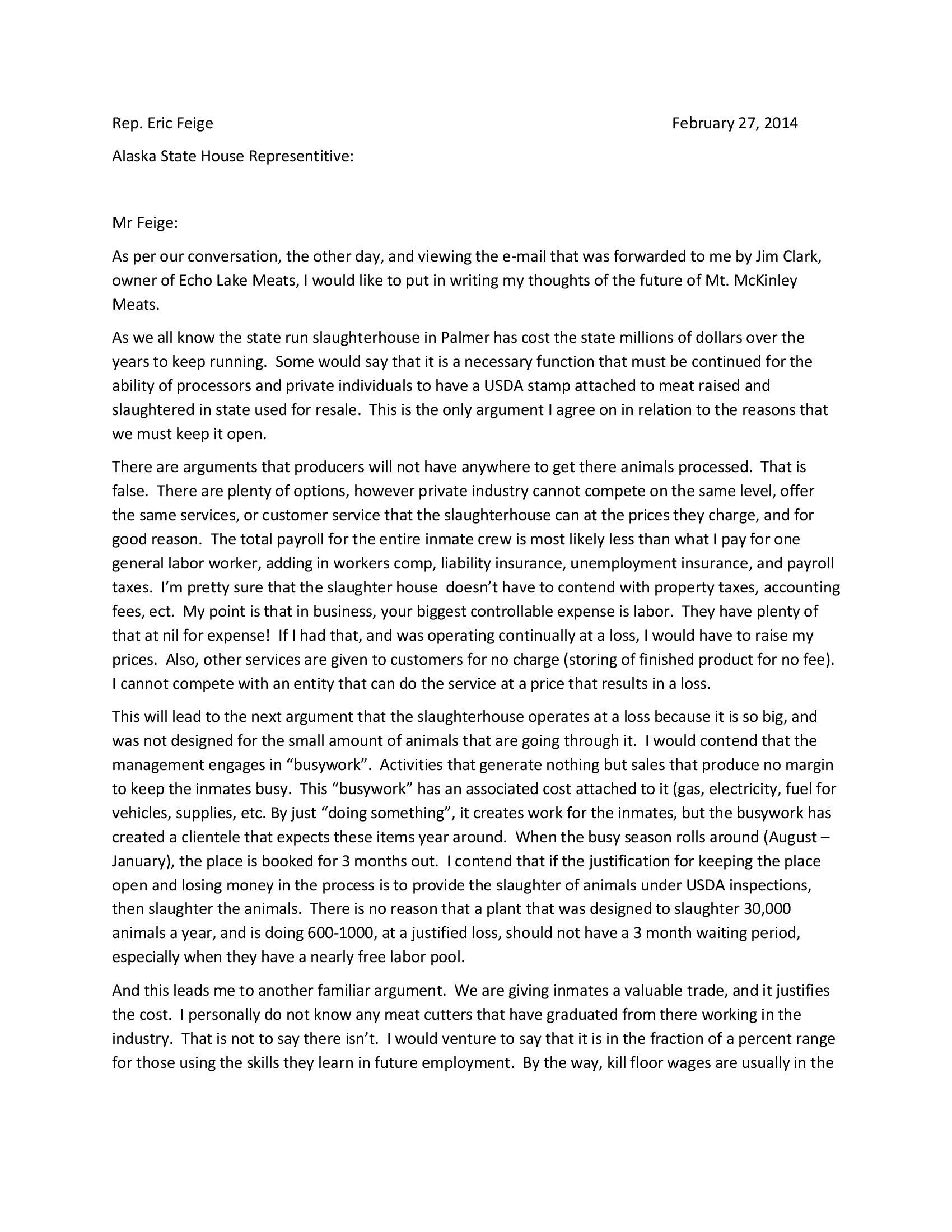
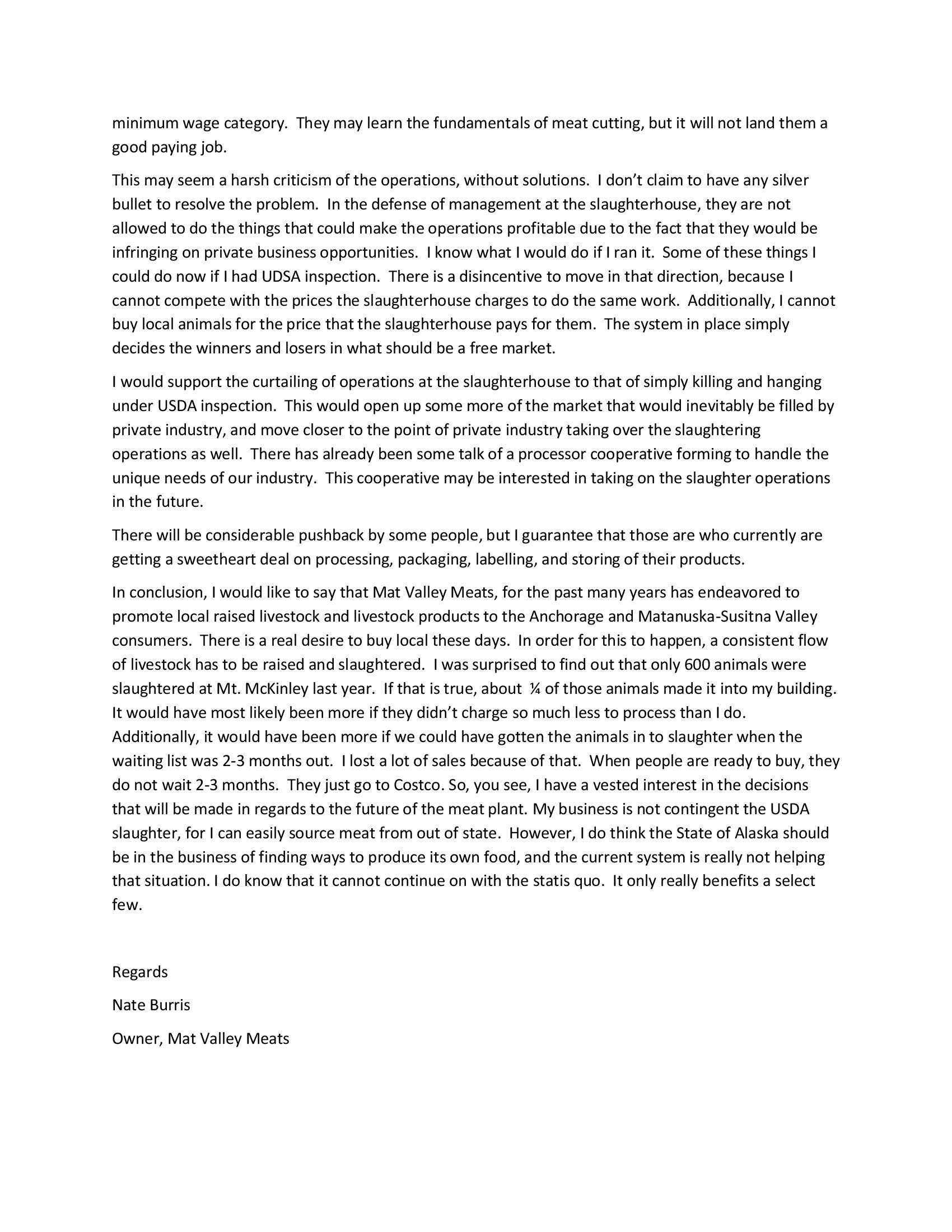
Instead of giving the MMMS plant away, it was Purchased by Cashiers Check, Run Properly by one Businessman, and Made a Profit 4 Years
The State asset was sold for $300,000 in 2017. The new owner, Greg Giannulis invested more than that to bring the facility up to a standard assuring continued US Department of Agriculture (USDA) certification. Thus, an asset which had been losing $Millions as a hapless State enterprise has now showing a profit and providing Alaskan-grown meat for Alaskan consumption.
Institutional Spite and Envy
Further, in typical State management tradition, money from sale of the asset was invested with Denali Meat Company, aspiring to build yet another slaughterhouse to compete with MMMS—which promptly went broke—losing the State investment outright.
Division of Agriculture Central Committee Chuckleheads

Few Alaskan businesses have the capacity to operate an agriculture enterprise at a profit without State subsidy. When Giannulis provided a sale listing to Atlanta, GA based Realtor Bill Borden, HE then tricked Alaska Hog farmer Todd Elsberry into a lease agreement with a corporation having no assets. This has resulted in minimal production of the facility and substantial financial losses for Elsberry. Bordon’s 14 percent ownership company is now making leased payments on a property he was supposed to sell.
Oh, and Bill Borden is also a Doctor of Divinity!

AK Land Policy Blocks Food Security
From the original story:
Alaskans desiring food security should be happy to know today MMMS is prospering and ready to process all of the livestock that can be delivered to it’s loading dock in Palmer, Alaska. But, According to Giannulis, there isn’t enough beef and hogs in Alaska to supply his plant for more than a few months. Most animals must be brought up from Outside, but he does also own a Palmer farm for holding animals for processing, and he maintains a herd of some 400 beef feeding on Alaska grain in Delta Junction.To have true food security Alaska needs more commercial farmers to provide the numbers of animals needed. For cattle this typically requires 4-5 acres of land per animal. Alaska legislators need to make this possible!
In Mid-November (2020) Giannulis and an employee drove a truck with livestock trailer over white-knuckle winter roads to Delta to pick up 10 beef and twelve hogs for processing in Palmer. Others animals were brought in another truck to help fulfill the anticipated need for some 100 animals per week at MMMS. Throughout the now 10-month Pandemic, Giannulis has supplied meat through his Eagle River store, Mike’s Meats and other Alaska meat suppliers, who purchase fresh meats from him.
Giannulis never had a shortage during the pandemic. Every day he receives orders for boxes of meats to be shipped statewide. He says his processing plant could handle as much as 350 animals per week, and twice that amount with double-shifts at MMMS, if there was demand for fresh meat over meat shipped in from Outside.
Whatever name anybody wants to call the Palmer slaughterhouse, it is still Mt. McKinley Meats and Sausages on the land records of the MatSu Borough.
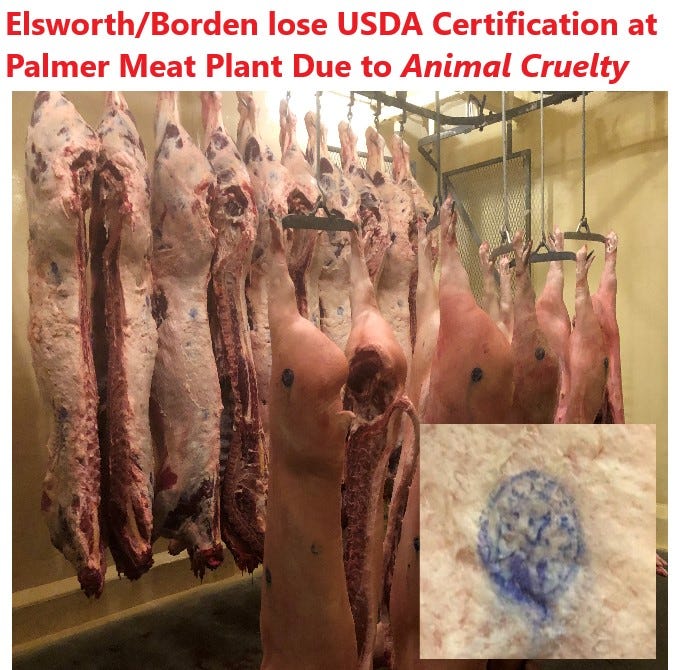
Today Elsberrys are partners with a guy who did a dirty deal to get into an ownership position using an Alaska Corporation having nothing of true value. Had Borden sold the facility to a worthy buyer and took an honest commission Alaska would be in a better position for food security. Instead, Alaska Meat Packers, Inc. is a marginal operation that has brought public shame to the MatSu Ag Community.
[8] Alaska Meat Packers’ Pig in a Poke, DONN LISTON November 5, 2024
https://donnliston907.substack.com/publish/post/181956506/
Today Mike’s Meats still delivers boxes of quality meat to Alaskans from sources in Seattle.
Nothing has Improved in Five Years of a DO NOTHING Governor and Legislature—Urging Alaskans to Grow Gardens for Food Security—while they Ride this Political Hobby Horse from Backwaters Juneau.

References:
[1] What if Alaska’s 2020 Election was Hacked? DONN LISTON April 6, 2021
https://donnliston907.substack.com/p/what-if-alaskas-election-was-hacked
[2] AK National Guard Initiates Response, by Sinclair Broadcast Group, April 23, 2020
https://khqa.com/news/coronavirus/alaska-national-guard-initiates-proactive-response-to-coronavirus-pandemic
[3] Building Food Security in Alaska, Ken Meter & Megan Phillips-Goldenberg, Crossroads Resource Center, Minneapolis, MN, July 28, 2014.
[4] Alaska Food Policy Council, Deirdre Helfferich, Managing Editor, University of Alaska Fairbanks, Agroborealis publication, Vol 42, No 1 Winter 2011-12
(These documents are ALSO included as jpg files in the end)
[5] Mt. McKinley Meats & Sausage Recommendations and Final Report AK Div of Ag
https://dnr.alaska.gov/ag/MMMS/MMMSReviewandRecommendationsFinalReport120103.pdf
[6] Former Philippine Capitol Makes Dandy Museum- …and Revelations about Juneau’s Capital Theme Park DONN LISTON June 8, 2023
https://donnliston907.substack.com/publish/post/171002694
[7] Alaska’s Soviet-Style Food Security Program, DONN LISTON June 13, 2023
https://donnliston907.substack.com/publish/post/170935947
[8] Denali Meat Company Statement of Interest http://dnr.alaska.gov/ag/MMMS/DenaliMeatCoTransition.pdf
HARD COPY
Transition of the Meat Plant to Private Sector Operator
The high-quality meat plant is a valuable asset to all Alaskans. Currently, livestock and grain producers of all sizes, local meat retailers, and 4-H animal exhibitors statewide depend the meat plant for reliable, USDA-approved slaughter and processing. What Alaska needs is a stable, reliable USDA slaughter and processing facility that serves all Alaskans, … whether producer, retailer, or 4-H exhibitor.
A stable, reliable meat plant is essential to restoring confidence in Alaskan producers, retailers, and future markets for fresh, local, Alaska Grown meat. We believe the way to save the plant and grow the market for Alaska Grown meat is for DNR to issue an RFP (Request for Proposals) that would let private sector companies compete for a lease to operate the plant.
For years, the State of Alaska has subsidized the meat plant and allowed it to run inefficiently. The State’s indecision about the plant’s direction has resulted in a stunted Alaska meat industry. Additionally, the marketing restrictions and unreliable and costly inmate labor currently limit marketing, profitability, and production at the meat plant.
We think Alaska ought to be focused on generating more Alaska Grown meat and improved food security. The meat plant can play a key role in that mission if allowed to operate more efficiently with a private sector operator. More efficient operations would result in expanding production at the plant and the corresponding growth of our livestock and processing industries would benefit all Alaskans. In short, a sustainable slaughter and processing plant run by a private sector company would better grow the state’s economy, improve the health of its citizens, and
increase Alaska’s food security efforts.In 2015, an independent expert who reviewed the meat plant’s operations summed it up this way in his written analysis, (quote) “The state should maintain ownership of the plant and
offer it for lease to a private operator.” (M. Callicrate, Ranch Foods Direct, Co.)We, the owners of Denali Meat Company, an Alaska company with Alaskan owners, want the chance to compete to operate the meat plant under a lease from the state.
Summary of what we desire from the State of Alaska:
• We respectfully request that the Division of Agriculture/DNR immediately begin preparing a Request for Proposal to lease the meat plant to the private sector. The RFP should be “on the street” before the end of the legislative session so everyone will know the direction of the plant before the State’s new fiscal year begins.
• We request that DNR work with legislators to establish a one-year or shorter transition period to the private sector entity with sufficient state funding to do so during FY17.
• We request DNR support statutory changes, if any become necessary, to gain legislative support for the proposal.
Key Elements of the DNR Plan forward should include:
• House and Senate action in FY 17 budget to implement a one-year (or shorter) transition period to private sector operations.
RFP guidelines should:
• Contain clear standards for the subsequent contract to ensure that a private sector operator treats similarly situated producers and livestock owners in a fair and even-handed way regarding scheduling and pricing at the slaughterhouse.
• Clearly state that the private operator will not be required to buy diseased orotherwise unmarketable animals.
·
NOT require inmate labor as part of the subsequent contract.Benefits of DNR plan to transition meat plant to private sector operator include:
• Protection of a valuable asset to the State of Alaska.
• More Alaska Grown meat to benefit all Alaskans.
• Future growth of Alaskan livestock businesses, grain
growers, and family farms.• Reduction or elimination of State subsidies.
• Reduces need for government oversight, management, and
economic support in an already over-burdened state economy.As I stated earlier, Denali Meat Company wants the chance to compete to be a part of saving the meat plant as a valuable Alaskan asset. If we are able to make a proposal under the
State’s RFP and if Denali Meat Company is awarded a contract, we believe we can
work with the State to ensure a smooth transition.We desire to maintain (and build) the current customer base while assuring minimal impacts during transition. We aim to assure lasting stability for producers statewide and
believe we can greatly expand operations to meet both producers’ and consumers’
demands as we aggressively market Alaska Grown meat products.As farmers, ranchers, and livestock producers and processors ourselves, we are willing to contract for and guarantee ethical operations and fair treatment of all customers and clients.
We certainly will not allow or expect preferential treatment for our individual
businesses.If awarded a contract by DNR, we will guarantee customer satisfaction, increased production, and provide consistent, quality products through Denali Meat Company. We (the owners) plan
to hire a competent, experienced manager to assume plant operations and responsibilities. We would be willing to meet regularly with DNR to monitor progress, productivity, and quality.Denali Meat Company is committed to modernizing and streamlining operations to create a meat
processing facility that will serve the needs of all residents while removing the burden from State operations. Alaska’s future depends on food quality and food security, and Denali Meat Company is poised to do its part to create a sustainable future for all Alaskans. Thank you for the opportunity to submit this proposal.Sincerely,
Denali Meat Company
Nate Burris, Todd Pettit, Ernie Diamond, Terry Van Wyhe
President Vice-Pres. Secretary Treasurer
[8] Alaska Meat Packers’ Pig in a Poke, DONN LISTON November 5, 2024
https://donnliston907.substack.com/publish/post/181956506/